Have you asked yourself whether braces or Invisalign would be best to achieve the straight smile you have always dreamed of? Here’s a breakdown of the differences between the two alignment approaches:
Braces:
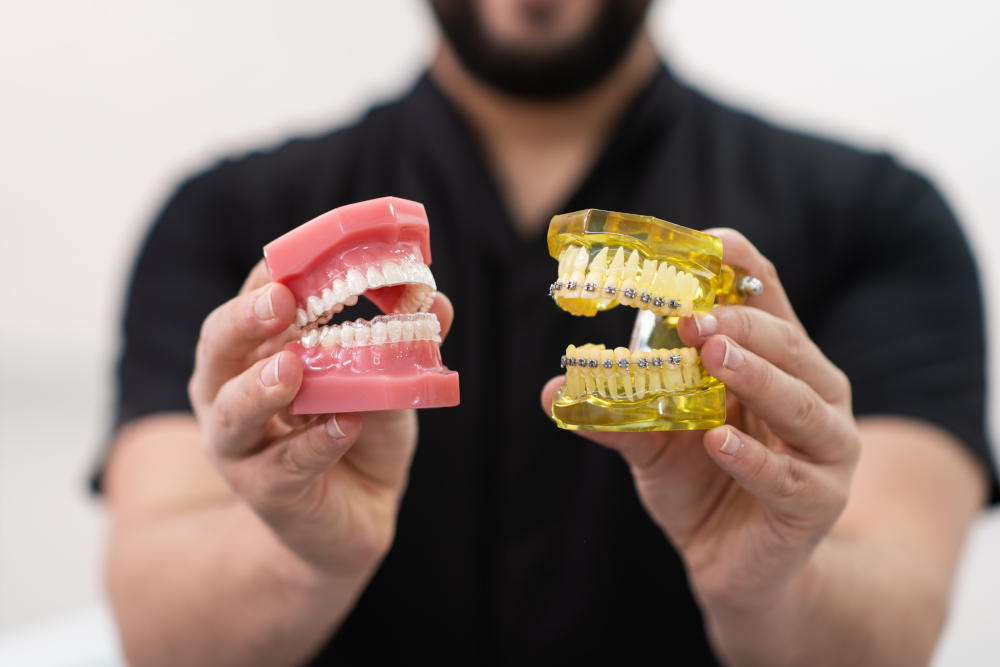
Traditional braces use brackets and wires that are fixed to your teeth and adjusted over time to gradually shift them into place. Because they are permanently attached, they work around the clock—and give your orthodontist a high level of control over how your teeth move.
One key advantage of braces is efficiency. Orthodontists can strategically position each bracket on the tooth and use different types of wires throughout treatment to precisely guide tooth movement. This level of control often allows for faster and more predictable results, especially in more complex cases.
There are two common types of braces:
- Metal Braces:
These are the most traditional and widely used option. Made of high-grade stainless steel, metal braces are durable and typically the most cost-effective. They are highly effective for all levels of treatment, including complex cases, but they are the most noticeable. - Ceramic Braces:
Ceramic braces work the same way as metal braces but use tooth-colored or clear brackets that blend in with your natural teeth. They’re a great option for people who want the reliable and often faster results of braces while maintaining a more discreet appearance similar to Invisalign. While less noticeable, they can be slightly more delicate and may require a bit more care.
Invisalign:
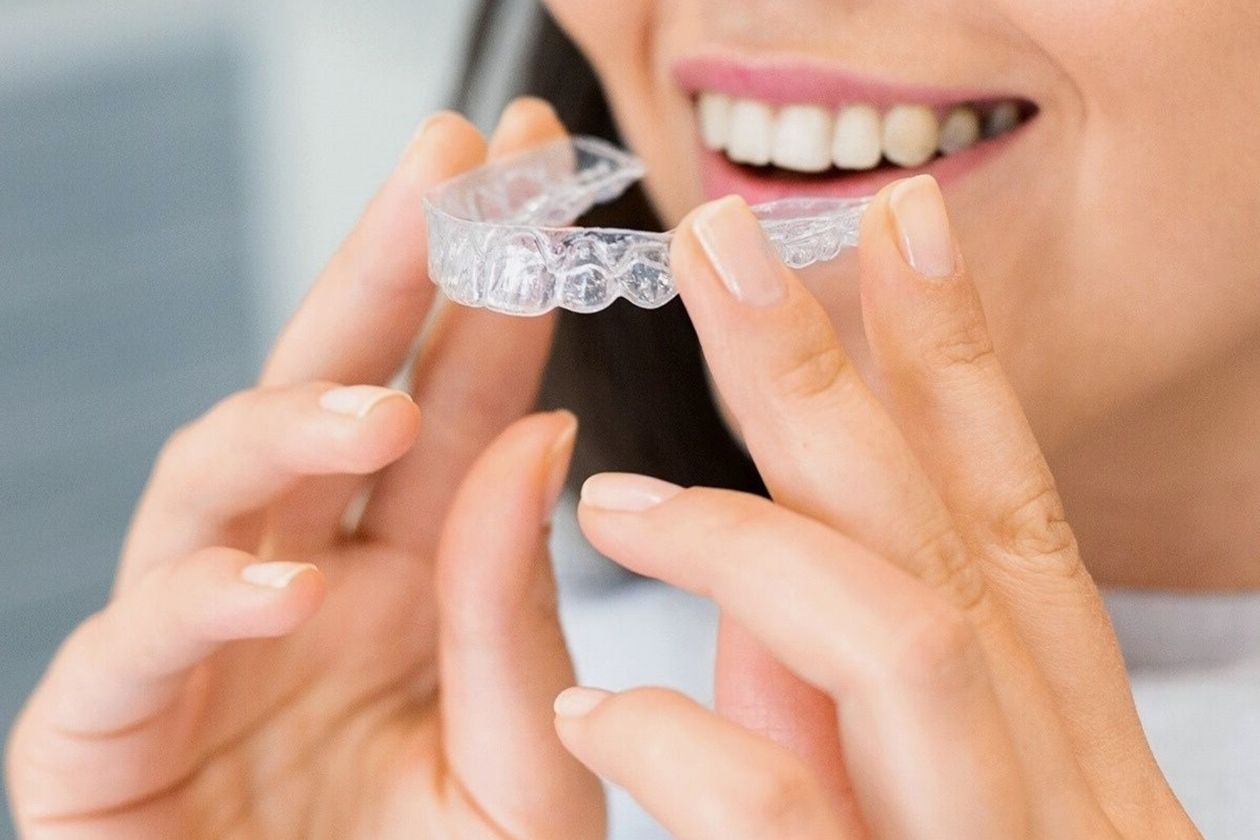
Invisalign uses a series of clear, removable aligners that are custom-made to fit your teeth. Each set is worn for about 1–2 weeks before moving to the next. They are nearly invisible, making them a popular choice for those who want a subtle treatment option.
Aligners can be removed for eating, brushing, and flossing, which makes daily hygiene easier. However, they must be worn 20–22 hours per day to be effective. Because treatment relies on a sequence of trays rather than continuous in-office adjustments, tooth movement can be less controlled compared to braces, and treatment may take longer—especially if aligners aren’t worn consistently or if the case is more complex.
Which is right for you?
The best choice depends on your dental needs, lifestyle, and personal preferences. If you want maximum control, potentially faster results, or need more significant correction, braces (metal or ceramic) may be the better fit. If your case is mild to moderate and you prefer a nearly invisible option with flexibility, Invisalign could be ideal.
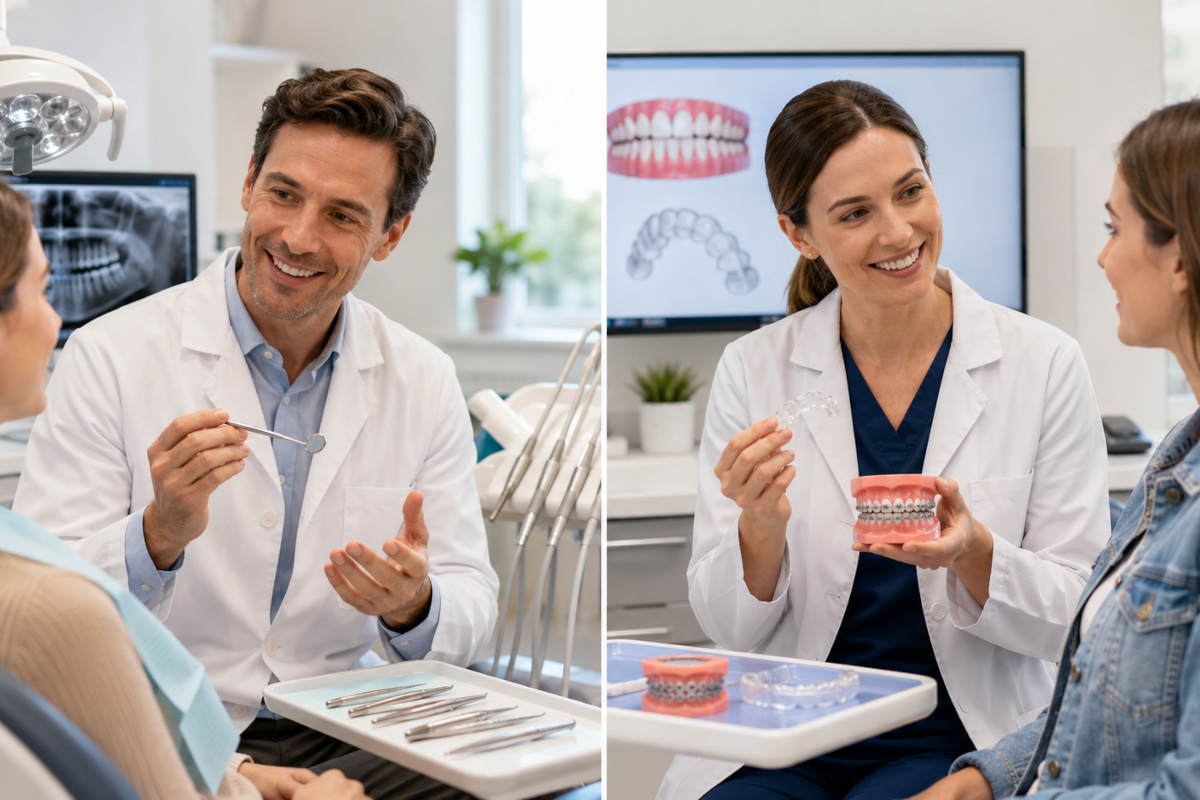
A consultation will help you determine the best path to your ideal smile. iSmile Orthodontics has five convenient locations in New York City, Bronx, NY, Yonkers, NY, White Plains, NY and Waterbury, CT. Give us a call to schedule your free consultation: 914.352.4780.